Table Of Content
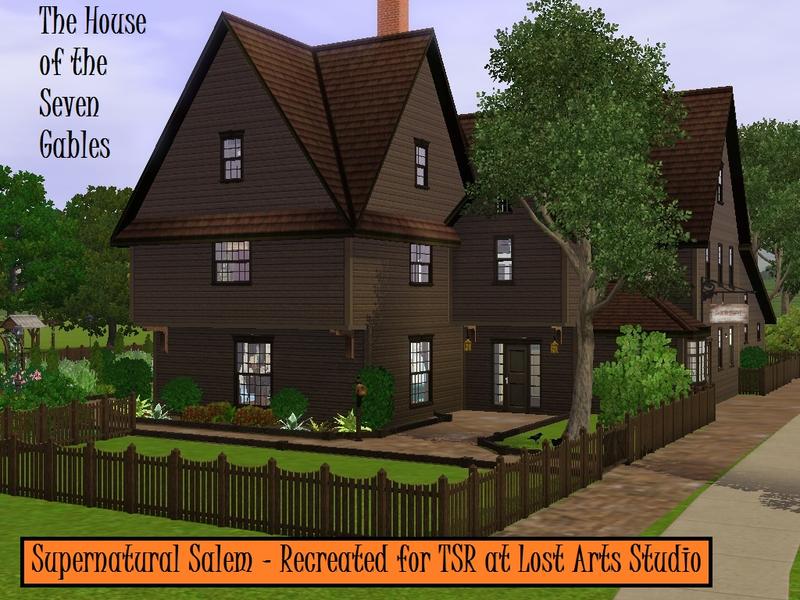
If, after long lapse of years,the right seems to be in our power, we find no niche to set it in. The betterremedy is for the sufferer to pass on, and leave what he once thought hisirreparable ruin far behind him. Peeping through the same crevice of the curtain where, only a little whilebefore, the urchin of elephantine appetite had peeped, the butcher beheld theinner door, not closed, as the child had seen it, but ajar, and almost wideopen. Through the passage-waythere was a dark vista into the lighter but still obscure interior of theparlor.
Clifford’s Chamber
It rustled the silkengarments of the ladies, and waved the long curls of the gentlemen’s wigs,and shook the window-hangings and the curtains of the bedchambers; causingeverywhere a singular stir, which yet was more like a hush. A shadow of awe andhalf-fearful anticipation—nobody knew wherefore, nor of what—hadall at once fallen over the company. Accordingly, with such a tramp of his ponderous riding-boots as might of itselfhave been audible in the remotest of the seven gables, he advanced to the door,which the servant pointed out, and made its new panels reecho with a loud, freeknock. Then, looking round, with a smile, to the spectators, he awaited aresponse. As none came, however, he knocked again, but with the sameunsatisfactory result as at first.
Hawthorne's Shadow Audio Tour
Many years later, the old maid who resides in the Pyncheon mansion, a nearsighted, scowling woman named Hepzibah, is forced to open a small store in her home to keep from starving. Hepzibah considers the store a source of great shame, despite the comforting words of Uncle Venner, a neighborhood character, and of Holgrave, Hepzibah’s rebellious young lodger, who practices an early form of photography known as daguerreotypy. Hepzibah remains pessimistic, and though she tries her best, her scowling face continues to frighten customers. The very day that she opens her shop, Hepzibah receives a visit from Phoebe, a young girl who is Hepzibah’s cousin through an extended branch of the Pyncheon family.
Nathaniel Hawthorne

In the present work, the author has proposed to himself—but with whatsuccess, fortunately, it is not for him to judge—to keep undeviatinglywithin his immunities. The point of view in which this tale comes under theRomantic definition lies in the attempt to connect a bygone time with the verypresent that is flitting away from us. It is a legend prolonging itself, froman epoch now gray in the distance, down into our own broad daylight, andbringing along with it some of its legendary mist, which the reader, accordingto his pleasure, may either disregard, or allow it to float almostimperceptibly about the characters and events for the sake of a picturesqueeffect. The narrative, it may be, is woven of so humble a texture as to requirethis advantage, and, at the same time, to render it the more difficult ofattainment. Holgrave reads Phoebe a short story he has written about Alice Pyncheon, a descendant of the Colonel, who lived in the House 37 years after the Colonel’s death. In the story, the then-head of the Pyncheons, Gervayse, summons a carpenter named Matthew Maule.
Cruel World Festival feat. Duran Duran, Blondie, Simple Minds and more
Round went the busily revolving machinery, kept in motion bythe scissor-grinder’s foot, and wore away the hard steel against the hardstone, whence issued an intense and spiteful prolongation of a hiss as fierceas those emitted by Satan and his compeers in Pandemonium, though squeezed intosmaller compass. It was an ugly, little, venomous serpent of a noise, as everdid petty violence to human ears. But Clifford listened with rapturous delight.The sound, however disagreeable, had very brisk life in it, and, together withthe circle of curious children watching the revolutions of the wheel, appearedto give him a more vivid sense of active, bustling, and sunshiny existence thanhe had attained in almost any other way. Nevertheless, its charm lay chiefly inthe past; for the scissor-grinder’s wheel had hissed in his childishears. If once he were fairly seated at the window, even Pyncheon Street would hardlybe so dull and lonely but that, somewhere or other along its extent, Cliffordmight discover matter to occupy his eye, and titillate, if not engross, hisobservation. Things familiar to the youngest child that had begun its outlookat existence seemed strange to him.
Life Without Light: Creatures in the Dark With Sarah McAnulty
They were wandering all abroad, on precisely sucha pilgrimage as a child often meditates, to the world’s end, with perhapsa sixpence and a biscuit in his pocket. In Hepzibah’s mind, there was thewretched consciousness of being adrift. She had lost the faculty ofself-guidance; but, in view of the difficulties around her, felt it hardlyworth an effort to regain it, and was, moreover, incapable of making one. Onrecognizing Matthew Maule, she assumed an air of somewhat cold but gentledignity, the rather, as there was a certain peculiar smile on thecarpenter’s visage that stirred the native pride of the fair Alice.
The 340-year-old house that inspired the classic Nathaniel Hawthorne novel.
House of Seven Gables - East Hampton Star
House of Seven Gables.
Posted: Thu, 16 May 2019 07:00:00 GMT [source]
Look where she would,lay her hand on what she might, the object responded to her consciousness, asif a moist human heart were in it. Now, the wizard’s grandson, the young Matthew Maule of our story, waspopularly supposed to have inherited some of his ancestor’s questionabletraits. It is wonderful how many absurdities were promulgated in reference tothe young man. He was fabled, for example, to have a strange power of gettinginto people’s dreams, and regulating matters there according to his ownfancy, pretty much like the stage-manager of a theatre. There was a great dealof talk among the neighbors, particularly the petticoated ones, about what theycalled the witchcraft of Maule’s eye.
A love letter to LACMA’s entrance plaza
House of the Seven Gables Resumes Tours April 2 - Northshore Magazine
House of the Seven Gables Resumes Tours April 2.
Posted: Wed, 24 Mar 2021 07:00:00 GMT [source]
It seemed as if the house stood in a desert, or, by somespell, was made invisible to those who dwelt around, or passed beside it; sothat any mode of misfortune, miserable accident, or crime might happen in itwithout the possibility of aid. In her grief and wounded pride, Hepzibah hadspent her life in divesting herself of friends; she had wilfully cast off thesupport which God has ordained his creatures to need from one another; and itwas now her punishment, that Clifford and herself would fall the easier victimsto their kindred enemy. In the further progress of the legend, there is a long, grotesque, andoccasionally awe-striking account of the carpenter’s incantations (if sothey are to be called), with a view of discovering the lost document. Itappears to have been his object to convert the mind of Alice into a kind oftelescopic medium, through which Mr. Pyncheon and himself might obtain aglimpse into the spiritual world. He succeeded, accordingly, in holding animperfect sort of intercourse, at one remove, with the departed personages inwhose custody the so much valued secret had been carried beyond the precinctsof earth. During her trance, Alice described three figures as being present toher spiritualized perception.
Watch a time lapse video of the Broad museum construction
In this respect he was a child,—a child for the whole term ofhis existence, be it long or short. Indeed, his life seemed to be standingstill at a period little in advance of childhood, and to cluster all hisreminiscences about that epoch; just as, after the torpor of a heavy blow, thesufferer’s reviving consciousness goes back to a moment considerablybehind the accident that stupefied him. He sometimes told Phœbe and Hepzibahhis dreams, in which he invariably played the part of a child, or a very youngman. It would have causedan acute agony to thrill from the morning twilight, all the day through, untilbedtime; and even then would have mingled a dull, inscrutable pain and pallidhue of misfortune with the visionary bloom and adolescence of his slumber. Butthe nightly moonshine interwove itself with the morning mist, and enveloped himas in a robe, which he hugged about his person, and seldom let realities piercethrough; he was not often quite awake, but slept open-eyed, and perhaps fanciedhimself most dreaming then.
The artist put his finger on the contrivance to which he had referred. Informer days, the effect would probably have been to cause the picture to startforward. But, in so long a period of concealment, the machinery had been eatenthrough with rust; so that at Holgrave’s pressure, the portrait, frameand all, tumbled suddenly from its position, and lay face downward on thefloor. A recess in the wall was thus brought to light, in which lay an objectso covered with a century’s dust that it could not immediately berecognized as a folded sheet of parchment. Holgrave opened it, and displayed anancient deed, signed with the hieroglyphics of several Indian sagamores, andconveying to Colonel Pyncheon and his heirs, forever, a vast extent ofterritory at the Eastward. Notwithstanding what he had just said, and mostsincerely, in regard to the self-balancing power with which Phœbe impressedhim, it still seemed almost wicked to bring the awful secret of yesterday toher knowledge.
Those mists had gathered, asif to symbolize a great, brooding mass of human trouble, doubt, confusion, andchill indifference, between earth and the better regions. It smote her with the wretched conviction that Providenceintermeddled not in these petty wrongs of one individual to his fellow, nor hadany balm for these little agonies of a solitary soul; but shed its justice, andits mercy, in a broad, sunlike sweep, over half the universe at once. But Hepzibah did not see that, just as there comes awarm sunbeam into every cottage window, so comes a lovebeam of God’s careand pity for every separate need.
The garden, with its muddy walks, and the chill, drippingfoliage of its summer-house, was an image to be shuddered at. Nothingflourished in the cold, moist, pitiless atmosphere, drifting with the brackishscud of sea-breezes, except the moss along the joints of the shingle-roof, andthe great bunch of weeds, that had lately been suffering from drought, in theangle between the two front gables. A glow ofartistic approval brightened over Alice Pyncheon’s face; she was struckwith admiration—which she made no attempt to conceal—of theremarkable comeliness, strength, and energy of Maule’s figure. But thatadmiring glance (which most other men, perhaps, would have cherished as a sweetrecollection all through life) the carpenter never forgave.
At thethought, the ambitious father almost consented, in his heart, that, if thedevil’s power were needed to the accomplishment of this great object,Maule might evoke him. The wild, chimney-corner legend (which, without copying all its extravagances,my narrative essentially follows) here gives an account of some very strangebehavior on the part of Colonel Pyncheon’s portrait. This picture, itmust be understood, was supposed to be so intimately connected with the fate ofthe house, and so magically built into its walls, that, if once it should beremoved, that very instant the whole edifice would come thundering down in aheap of dusty ruin.
With miles and miles of varied scenery between, there was noscene for her save the seven old gable-peaks, with their moss, and the tuft ofweeds in one of the angles, and the shop-window, and a customer shaking thedoor, and compelling the little bell to jingle fiercely, but without disturbingJudge Pyncheon! It transported its great,lumbering bulk with more than railroad speed, and set itself phlegmaticallydown on whatever spot she glanced at. The quality of Hepzibah’s mind wastoo unmalleable to take new impressions so readily as Clifford’s. He hada winged nature; she was rather of the vegetable kind, and could hardly be keptlong alive, if drawn up by the roots.
She had struck with the entire force of her heart’svibration, communicating, by some subtile magnetism, her own terror to thesummons. Clifford would turn his face to the pillow, and cover his head beneaththe bedclothes, like a startled child at midnight. She knocked a third time,three regular strokes, gentle, but perfectly distinct, and with meaning inthem; for, modulate it with what cautious art we will, the hand cannot helpplaying some tune of what we feel upon the senseless wood. Several days passed over the Seven Gables, heavily and drearily enough. In fact(not to attribute the whole gloom of sky and earth to the one inauspiciouscircumstance of Phœbe’s departure), an easterly storm had set in, andindefatigably apply itself to the task of making the black roof and walls ofthe old house look more cheerless than ever before. Poor Clifford was cut off, at once, from allhis scanty resources of enjoyment.


No comments:
Post a Comment